

Portfolio tracker and watchlist: two lists, different jobs
The watchlist is what you are thinking about and the portfolio is what you actually own, and keeping them apart is the point. How transactions work, and what we deliberately do not do with your holdings.
Last updated July 19, 2026
Two lists, different jobs. The watchlist is what you are thinking about. The portfolio is what you actually own. Keeping them separate is the point: a shortlist that quietly turns into a pretend portfolio teaches you nothing.
The watchlist
Add a company and it appears here with its score, sector, size and price, so the shortlist reads like a small screener rather than a list of ticker symbols.
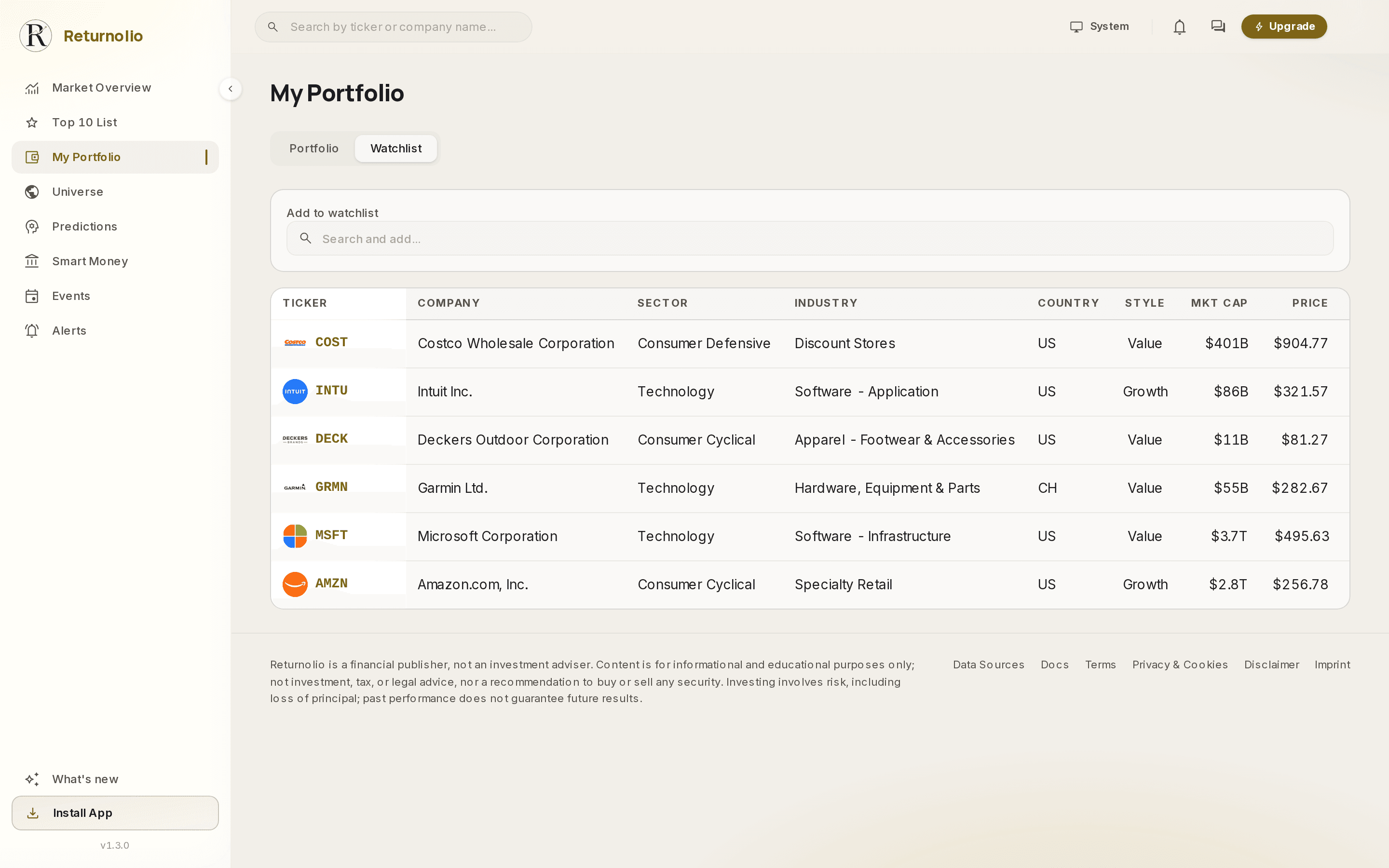
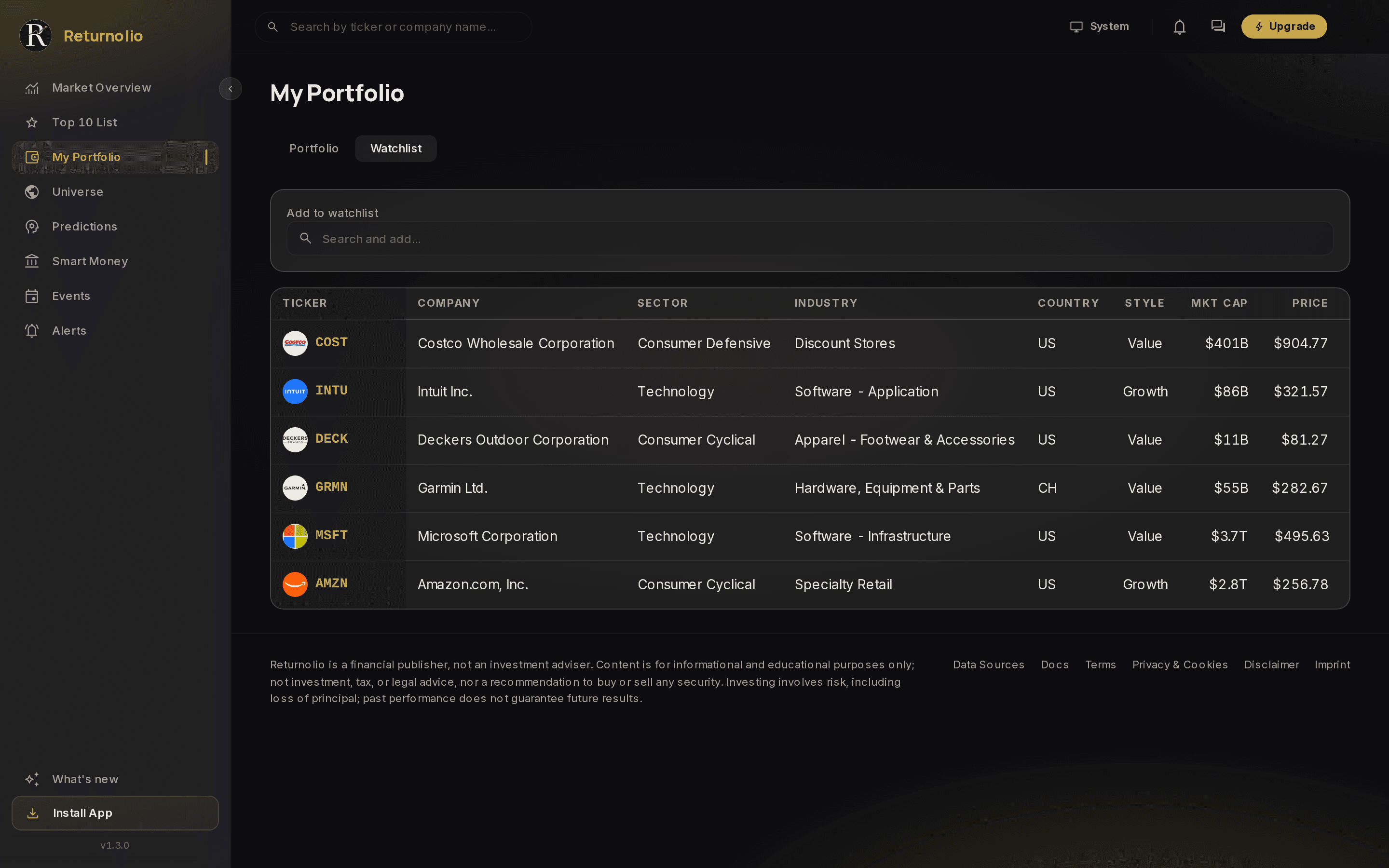
Watching a company here and following it for alerts are separate actions. Adding to the watchlist does not by itself start sending you anything; alert follows are set up in Alerts. Keeping them apart means a long shortlist does not automatically become a loud inbox.
The portfolio
The portfolio tab works on transactions rather than positions. You record what you bought, at what price, on what date, and the position is derived from that history.
This is more work upfront than typing in a share count, and it is the only way to get a cost basis (what your shares actually cost you, every buy counted) that survives you adding to a position three times at different prices. It also means your holdings history stays intact when you sell part of a position rather than being overwritten.
What we do with your holdings
We show you your positions, their current value, and how the companies you own score. That is the whole list. We do not sell holdings data, we do not use it to build a product for anyone else, and nobody at Returnolio has any reason to look at it.
What it is not
It is not a broker. Nothing here places an order or moves money. Higher tiers can link a brokerage account to import holdings, and that link is read-only: it pulls positions in, and it cannot trade. See What Returnolio is not for the full boundary.
It is also not performance attribution software. You get your holdings, their current value, how the mix is spread across positions, and how the whole thing has moved over time. What you will not get is factor decomposition or benchmark-relative attribution (the professional tooling that breaks a return down into where each piece of it came from). That is a different kind of product and we do not pretend to be it.
The Top 10 portfolio is a separate thing
The positions published alongside the Top 10 are ours, not yours. They are a disclosure: we tell you what we hold so you can read the research knowing where the people who wrote it stand. Changes are disclosed when the monthly edition publishes, after the fact, and they are not an instruction for you to do anything. Your own portfolio is private and never appears in it.
Educational and proprietary. This explains what our research does, not the exact formula behind it, and it is not personalised investment advice. See the full disclaimer.
Was this page helpful?