

Getting started: your first 10 minutes in Returnolio
Narrow 973 companies to a handful, read one company properly, then read one score without over-reading it. Ten minutes start to finish, and a free account is enough to follow along.
Last updated July 19, 2026
You don't need a tour of every screen to get value out of Returnolio. You need three things: a way to narrow 973 companies down to a handful, a way to read one company properly, and a sense of what the score is and isn't telling you.
That's what this page covers. Ten minutes, start to finish.
Before you start
A free account gets you the market overview, the Top 10 archive from two editions back, one full company analysis a month, and the methodology docs. The screener in step 1 starts on the Core plan; on a free account, start at step 2 with a company you already own.
1. Start with the whole market, then cut it down
Open Universe. Every company we cover is here, sorted by Returnolio score by default.
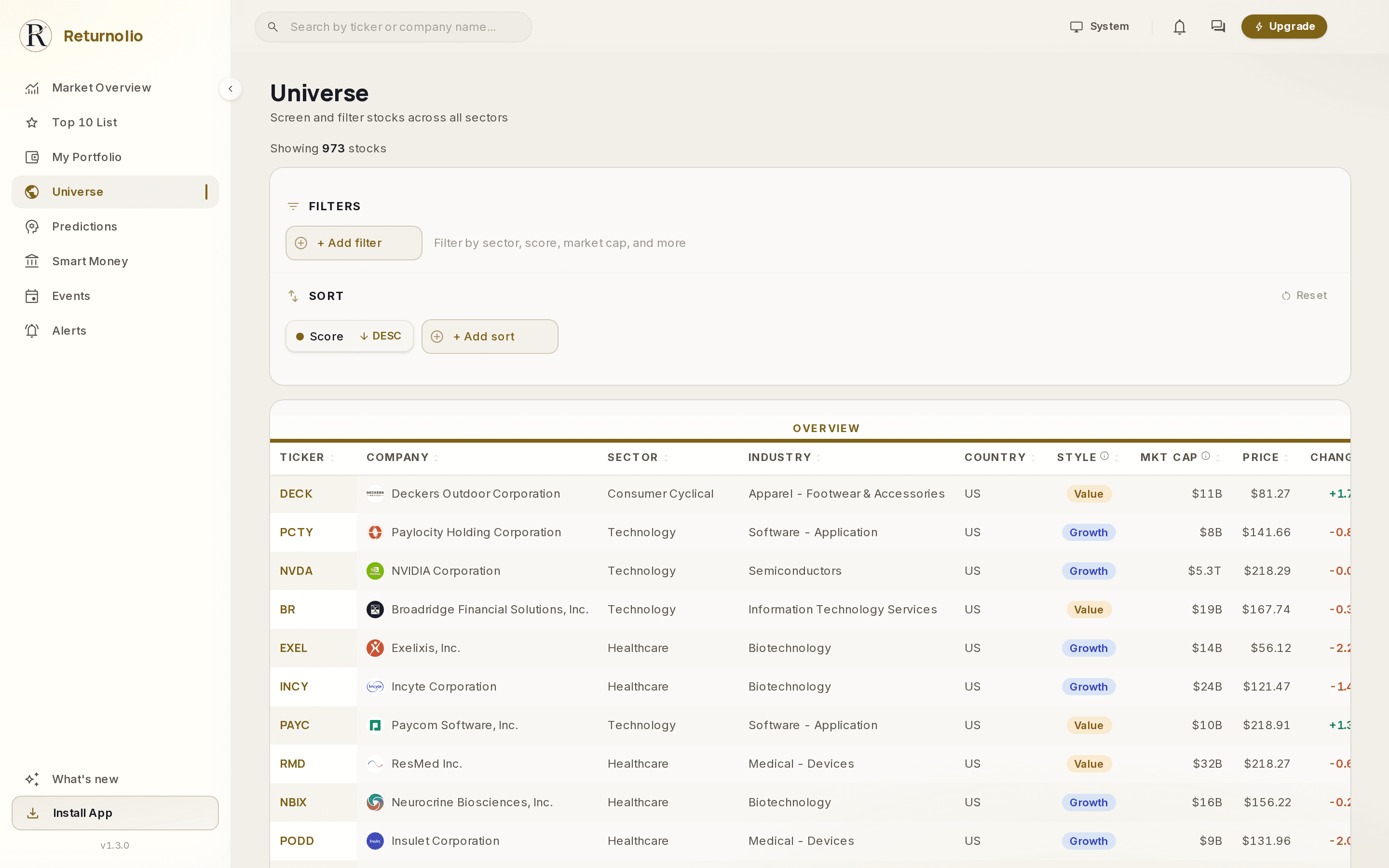
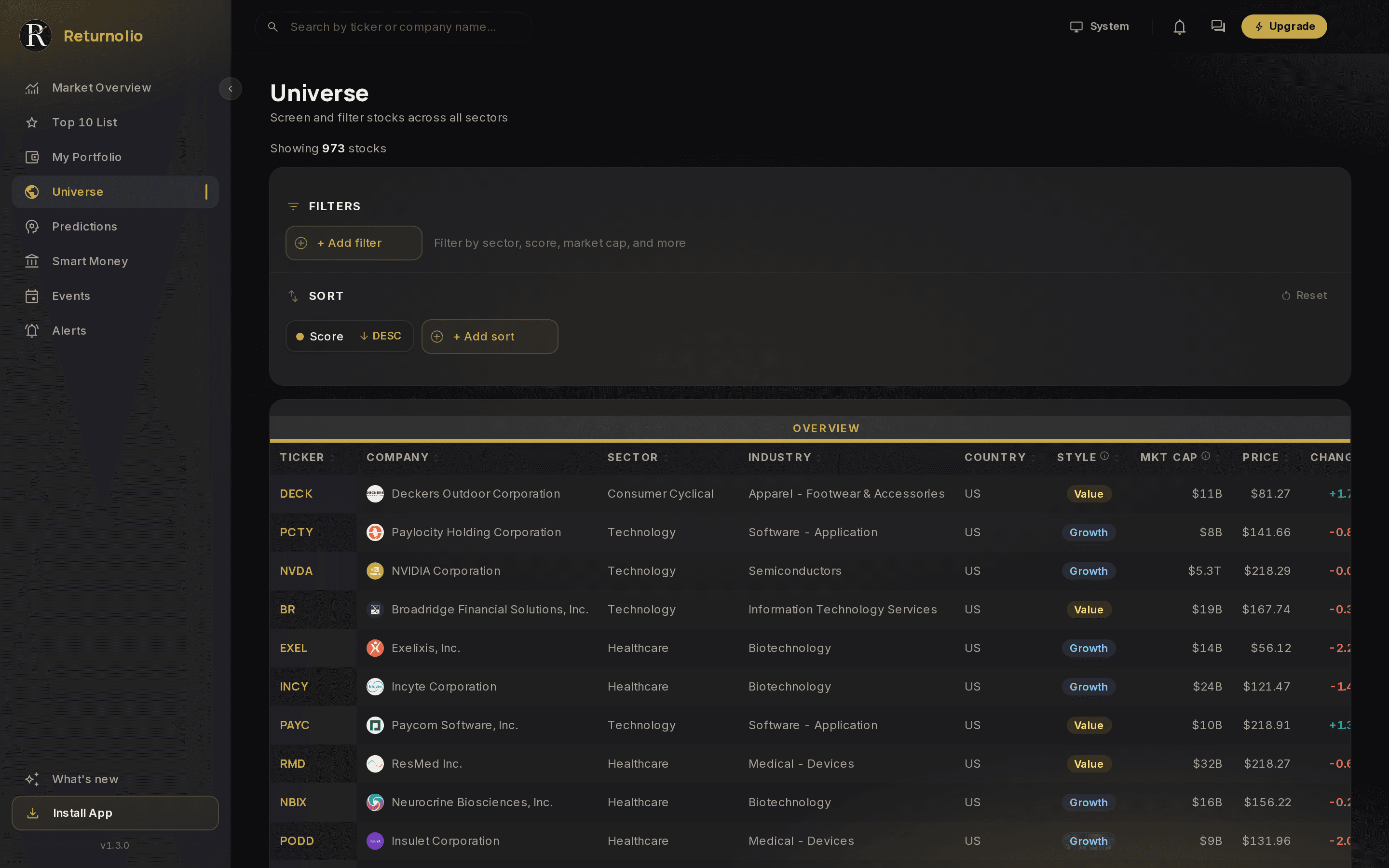
The number under the heading is the one to watch. It says how many companies are left after your filters. Add a sector, a market-cap floor, a minimum score, and watch it fall. When it reads something like 20, you have a reading list.
Sorting is separate from filtering, and you can stack both. Sort by score, then by market cap, and the table breaks ties the way you asked.
2. Open one company
Click any row. The ticker page is one long document, and the tabs across the top are shortcuts to sections further down rather than separate pages. You can scroll the whole thing if you'd rather read it end to end.
Start at the Returnolio Score. It's the section that explains the headline number instead of just showing it.


Three things worth noticing here.
Each pillar (one of the ingredient scores behind the headline number) is ranked against the whole universe rather than scored on an absolute scale, so one extreme metric cannot drag everything else along with it. Think of a race: winning by a mile and winning by a metre both count as first place, so one freak number only carries a company to the top of that one ranking and no further. Every pillar is shown, each opening into the sub-metrics that produced it. And the score history, the last row, shows you how the score got where it is, which matters more than today's value.
3. Read the score for what it is
A score is a ranking, not a verdict. It compares a company against the rest of the universe on quality, real earning power and price. It has nothing to say about your tax position, your time horizon, or whether you already hold three companies in the same industry.
The honest version
A high score means a company ranks well on the things we measure. It is not a prediction, and it is not a recommendation to buy anything. Read What Returnolio is not before you lean on it.
Where to go next
- The ticker page, section by section, if you want the full tour
- The screener, for filters worth saving
- How the score is built, if you want the reasoning before the product
Educational and proprietary. This explains what our research does, not the exact formula behind it, and it is not personalised investment advice. See the full disclaimer.
Was this page helpful?